
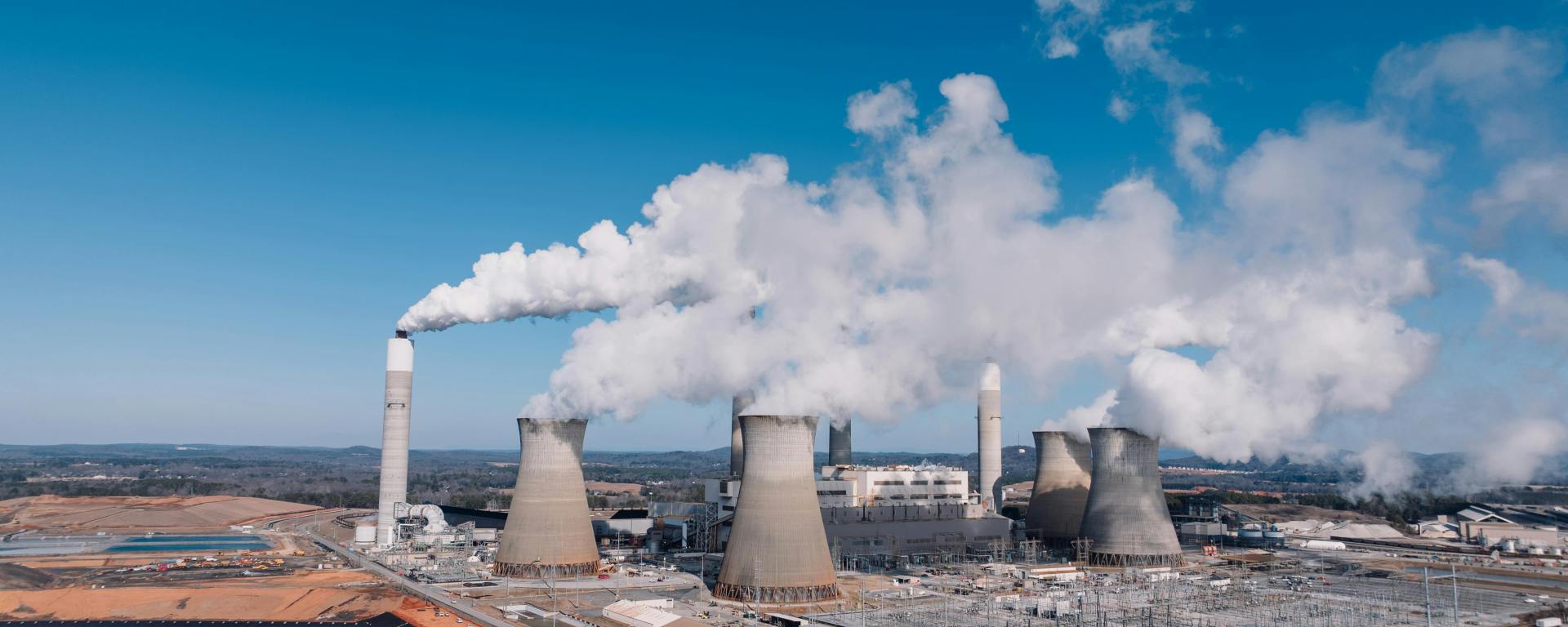
Clean coal has reentered the energy spotlight as the Trump administration rolls out its energy policy agenda, per a series of recent executive orders. In April, President Donald Trump issued an order revealing plans to utilize “beautiful clean coal resources” in an effort to reshore energy. Plans call for reduced regulations in the coal industry, intended to spark domestic energy production.
But does “clean coal” live up to its moniker as “clean,” and how viable is it as a compromise between the environmentalists and those in favor of deregulation?
Coal has long been notorious for being the dirtiest of the big three fossil fuels. It produces more sulfur dioxide, nitrogen oxides, particulates, and carbon dioxide (the pesky central driver of climate change) than oil and natural gas. Because of this, the coal industry has gained a poor reputation as environmental awareness increases, and it has been in steady decline as manufacturers and businesses lean into renewables and cleaner energy options. In 2023, the use of coal for electricity generation in the U.S. clocked in below renewables, contributing only 16.2% to the electricity grid while renewables contributed 21%, per data from the U.S. Energy Information Administration.
However, clean coal technology has been pitched as the ticket to reinventing the coal industry, and making it cleaner and more environmentally-friendly as the world moves toward net-zero emission goals.
There are several types of clean coal technologies to note:
- Flue Gas Desulfurization (scrubbers) – Scrubbers target sulfur dioxide and can remove up to 98% of sulfur dioxide emissions when used at a coal-fired power plant. They work by injecting a reactant such as a calcium- or sodium-based reactant in the flue gas. The compound reacts with the sulfur dioxide, producing a solid compound so that the gas will not escape into the atmosphere.
- Low Nitrogen Oxide (NOx) Burners – Intended to lower the production of nitrogen oxides, these burners adjust the combustion process by methods such as restricting the combination of oxygen and nitrogen at high temperatures.
- Selective Catalytic Reduction – This process reduces nitrogen oxide emissions by using a catalyst to convert the gas into a less harmful substance. They have been found to be up to 90% effective in removing nitrogen oxides.
- Electrostatic Precipitators – This process targets particulate matter produced by coal plants. Electrostatic precipitators electrically charge particles to pull particulates out of gas streams and collect them so they do not escape into the atmosphere. These have been effective at coal plants, removing more than 99% of particulates in some cases.
- Carbon Capture and Storage – This method aims to prevent carbon dioxide produced by power plants from entering the atmosphere. These programs allow carbon to be captured, compressed, transported and contained in geological structures.
As seen above, clean coal technologies have yielded promising results thus far, especially for sulfur dioxide, nitrogen oxides and particulates. However, carbon dioxide remains at the forefront of concern regarding climate change. This is where carbon capture, utilization and storage (CCUS) technology comes in.
CCUS technology — which allows carbon to be captured directly from coal plants, transported, and used or injected into geological formations — is expected to play a significant role in moving toward net-zero emissions because it allows the capture of carbon after it is produced rather than simply preventing its production. This means it can be applied to industries where carbon emissions are unavoidable.
While CCUS technology has made strides, its rollout has been slower than expected, according to the International Energy Agency (IEA). The IEA noted that 45 commercial facilities around the world were using CCUS, some of which are in the U.S. These plants tend to have a carbon capture rate of about 90%. These results are promising, but the IEA points out that implementation of CCUS is lagging, with current projects likely to meet only 40% of the 2030 carbon goal (based on the goal of net-zero carbon emissions by 2050).
The expense of CCUS systems has likely played a role in its slow uptake. And the more efficient a CCUS system is, the more it tends to cost. Systems that capture more carbon require larger equipment and use more energy, drumming up costs.
Still, CCUS programs hold promise. Because of its perceived importance for the future, CCUS technology has been receiving funding and international attention from countries across the globe, including Canada and the European Union. And the U.S. has taken its own steps toward increasing funding. For example, in 2021, the U.S. dedicated $12 billion to supporting CCUS technology, both for development and implementation, in the Infrastructure Investment and Jobs Act.
While CCUS has dragged in its rollout over the years, other technology systems have emerged to reduce emissions. Currently, there are many coal plants that are supercritical or ultra-supercritical plants, meaning they operate at such high temperatures that the liquid and gas phases of water merge. They are more efficient than traditional coal plants and produce less emissions, amounting to about 15-30% less emissions.
Some people describe supercritical coal plants as “clean coal” because they do in fact reduce emissions. However, the dent they make in the fight against carbon pales in comparison to CCUS systems and other forms of clean energy such as renewables.
Overall, there have been some major strides already taken in cleaning up coal over the years. It is cleaner than it used to be, but it is not as “clean” as other forms of energy — at least not yet. Significant progress — and hefty funding — will be required still to address the coal industry’s emissions, especially its carbon production, to make it as “clean” as other energy options.
Discover more from Green Vignettes
Subscribe to get the latest posts sent to your email.
